


..Pradeep Kumar Nayak
It is often said that the media is the fourth pillar of democracy. But today, that very pillar is at the center of the greatest debate. The question is not whether the media exists or not. The question is: whose voice is the media speaking in, and whose silence is it maintaining? This is at the heart of the new debate over “freedom of expression.”
Earlier, media meant newspapers, radio and television. An editor’s pen could keep those in power awake at night. Journalists would go into the streets, examine files and publish the truth. At that time, the meaning of freedom was simple—speaking the truth without fear.
Today, the picture has changed. Today, media also means television debates, YouTube channels, Facebook pages and local portals. A camera is in everyone’s hands. Everyone is a reporter. There is a flood of information. But in this flood, the truth can also drown.
What is at the root of the new debate?
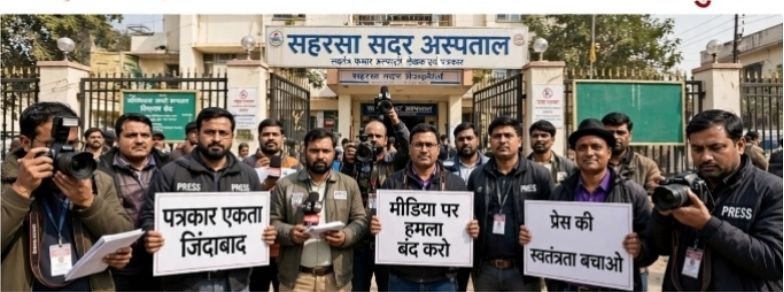
The first debate is about “fear and pressure.” Today, if a journalist writes about local corruption, raises questions about a library scam, or asks leaders to account for their actions, three dangers can arise. The first is a legal notice, the second is social-media trolling, and the third is the withdrawal of advertising. Large media houses may lose advertising revenue. A small journalist may face an FIR. In such a situation, an editor may begin to wonder, “Is this news more important, or is the channel more important?” And this is where freedom of expression begins to be curtailed.
The second debate is about “noise and truth.” Earlier, there was less news, but it was deeper. Today, there is news 24 hours a day, but much of it remains superficial. The noise in debates is so loud that the actual issue disappears. On one side is patriotism, on the other is the accusation of being anti-national. In between, no one talks about libraries, roads, drains or audits. Because TRPs come from noise, not from truth. So journalists also feel pressured. They know that if they raise issues such as “ISI in the guise of nationalism,” the channel may say, “This will not bring ratings.”
The third debate is about “money and journalism.” The media needs money to operate. Money comes from the government, corporations and political parties. Now think about it: how can you challenge the very hand from which the money is coming? Therefore, sometimes a story is stopped. Words are changed. The word “scam” is replaced with “irregularity.” And when journalists like Pradeep Kumar Nayak write 15 articles at the grassroots level, they may be labeled “negative.”
The fourth and most dangerous debate is about “public distrust.” Social media has turned everyone into a journalist. Someone uploads a video, someone spreads a rumor. The distinction between a genuine journalist and a fake one has become blurred. Now the public also says, “Everyone is sold out.” When trust itself is broken, what meaning does freedom of expression have?
So, has freedom of expression ended? No. It has not ended; its form has changed. Today, freedom does not simply mean speaking against the government. It means speaking against the crowd. Speaking against trends. Speaking even against one’s own owner.
“Citizen Voice” made a video about the Rajnagar Library go viral. This is freedom of expression. Pradeep Kumar Nayak wrote 15 articles. This is freedom of expression. You filed an RTI. That too is freedom of expression. The danger is that this freedom is now being suppressed by calling it a “conspiracy,” “propaganda” or an “agenda.”
So, what is the way forward? The media must decide whether it wants to be a mirror or a drum. If it becomes a mirror, it will have to show the bitter truth. If it becomes a drum, it will only make noise.
The government must decide that criticism is not hostility. Asking questions through the RTI is not treason. A video going viral is not a crime. If the media writes in fear, democracy will become crippled.
And most importantly, the public must decide what it wants to watch. Abuse on debates or work on the ground? Fake nationalism or genuine accountability? As long as we give our vote to TRPs, the media will serve us what gets ratings.
Conclusion
Freedom of expression does not operate merely because it is written in an article of the Constitution. It survives through courage. The courage of the journalist who writes the truth without worrying about advertising. The courage of the citizen who makes a video and asks questions. The courage of the editor who does not bow under pressure.
The new debate is about precisely this. Do we want media that keeps those in power happy, or media that keeps the public informed?
The final line is





Leave a Reply